Insulating a flat roof is crucial for keeping energy costs down and extending its lifespan. It stops heat from escaping, blocks moisture, and enhances comfort inside the building. Key materials include Polyisocyanurate (PIR), Expanded Polystyrene (EPS), and Mineral Wool.
The installation process involves cleaning the roof deck thoroughly, laying down vapor barriers, and sealing any gaps to ensure maximum efficiency. When selecting insulation, consider its thermal performance and how much it costs.
Regular checks by professionals, such as BRH Enterprises, are important. They help ensure the roof's durability and safety. For optimal results, understanding the types of insulation, their benefits, and seeking expert advice is recommended.
Proper insulation is key for energy savings and extending your roof's life. Explore options such as PIR, EPS, XPS, mineral wool, or spray foam. The installation process is crucial. Start with a clean surface. Seal gaps. Apply waterproofing. Eco-friendly materials reduce environmental impact. Regular checks by professionals, like BRH Enterprises, maintain insulation efficiency.
Flat roofs have a pitch under 10 degrees, setting them apart from sloped roofs. They come in two types: warm and cold. Warm flat roofs place insulation above the deck, stopping heat loss. Cold flat roofs, however, put insulation below the deck. This can cause condensation issues if not ventilated right.
It's key to know the difference between the two. This knowledge helps decide where to put insulation and how to ventilate. Cold flat roofs need proper ventilation to avoid moisture problems. Both roof types need good insulation and ventilation. This keeps indoor temperatures comfortable, cuts down on energy use, and prevents moisture damage.
Understanding flat roofs helps make smart choices about insulation and ventilation.
Insulation is key for energy-efficient and sturdy flat roofs. It cuts energy use and bills by keeping indoor temperatures stable. Additionally, it prevents moisture buildup, enhancing living conditions and prolonging the roof's life. Insulation boosts sustainability by saving energy. It ensures year-round comfort indoors, adding property value through improved energy efficiency and a smaller carbon footprint.
| Benefits of Insulation | |||
|---|---|---|---|
| Adaptable roof designs | Steady R-value over time | Low moisture absorption | Eco-friendly qualities |
| Protects structure | Speedy drying | Low impact on global warming | No harm to ozone layer |
Effective flat roof insulation comes from high-quality materials. Polyisocyanurate (PIR) insulation has an R-value of 6.8 per inch. It's known for its thermal efficiency.
Expanded Polystyrene (EPS) is lightweight and cost-effective, with an R-value of 4.6 per inch. It's good for flat roofs.
Extruded Polystyrene (XPS) offers an R-value of 5 per inch. It's ideal for moisture-prone flat roofs.
Mineral wool insulation is fire-resistant and natural. It provides long-term R-value.
Spray foam insulation creates an airtight layer. It ensures energy efficiency and moisture protection.
These materials ensure a durable and well-insulated flat roof system.
Polyisocyanurate (PIR) is a key player in the insulation industry, especially for flat roofs. It boasts a low thermal conductivity of 0.023 W/(m·K), making it highly efficient. Its use spans across pre-insulated ducts, roofing, and pipe insulation in various sectors.
To keep its performance optimal, PIR's shrinkage must stay below 1%. This ensures both its structural integrity and thermal efficiency remain intact over time. PIR's chemical and thermal resistance is notable, withstanding temperatures above 200°C. This durability makes it a preferred choice for many construction projects.
However, PIR has a downside. In fires, it can emit toxic substances, including hydrogen cyanide. This risk factor is crucial for fire safety in building designs. Understanding PIR's properties is essential for informed decision-making in insulation projects.
Begin by cleaning the flat roof deck thoroughly. Remove any debris or damage. This step ensures the system's structural integrity.
Next, install a vapor barrier. This is crucial to block moisture and protect the insulation from water damage.
Then, secure the insulation on top of the vapor barrier. This creates an effective thermal barrier. It helps conserve energy within the building.
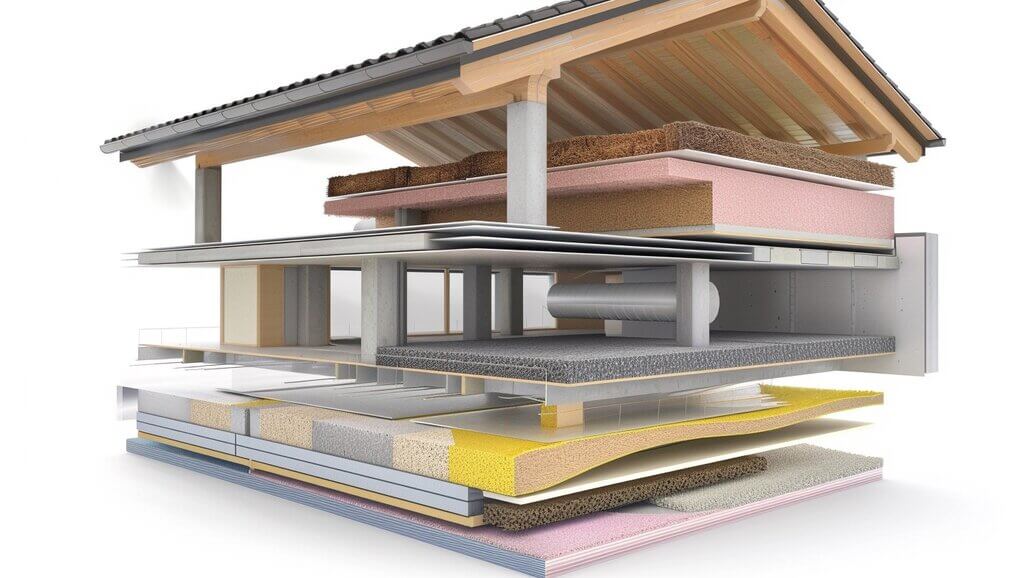
Seal gaps and joints in the insulation. This action is vital. It maintains an airtight seal. It boosts energy efficiency and prevents heat loss.
Finally, apply a waterproofing membrane over the insulation. This adds protection. It shields the insulation from external elements. It ensures long-lasting performance.
Stone wool insulation is key for low slope roofs, offering top-notch soundproofing and fire safety. Products like ROCKWOOL Toprock DD and others ensure roofs stay warm, dry, and stable over time. They are ideal for managing temperature, repelling water, and adding resilience. This insulation is crucial for energy savings and coping with weather changes. It also makes roof spaces usable for activities or green areas.
| Stone Wool Products | Advantages |
|---|---|
| ROCKWOOL Toprock DD | Boosts warmth |
| ROCKWOOL DD Plus | Blocks moisture |
| ROCKWOOL Multifix | Long-lasting |
| ROCKWOOL Tapered | Aids water flow |
| ROCKWOOL Flute Filler | Quiets noise |
Each product serves a unique purpose, from keeping heat in to preventing water damage, ensuring durable and efficient low slope roofing.
When choosing insulation for flat roofs, the environmental impact is key. Here's what matters:
Addressing flat roof insulation challenges begins with ventilation. Proper airflow prevents condensation, safeguarding insulation effectiveness and structural health.
Next, ensure airtight seals and combat thermal bridging to maintain thermal performance.
Slope design is crucial for water drainage, preventing ponding and water damage. Moisture management during installation protects long-term durability.
Lastly, balance insulation thickness with structural needs to achieve both energy efficiency and structural integrity. By tackling these steps, flat roof insulation will meet its performance goals.
Selecting the right material for flat roof insulation is crucial for thermal efficiency and durability. Consider thermal performance, moisture resistance, and cost when choosing. Explore three options:
Each material serves specific needs. Ensure the insulation material matches the flat roof's requirements.
Inspections are key for flat roof insulation. They ensure it works well and lasts long. Experts like BRH Enterprises are crucial. They check insulation is installed right, find leaks, and spot gaps. This saves energy, boosts comfort, and extends roof life.
Professional inspections also meet safety and building codes. Call BRH Enterprises at (920) 249-4228 for a detailed check. This helps fix problems early, keeping your insulation effective for years.
